
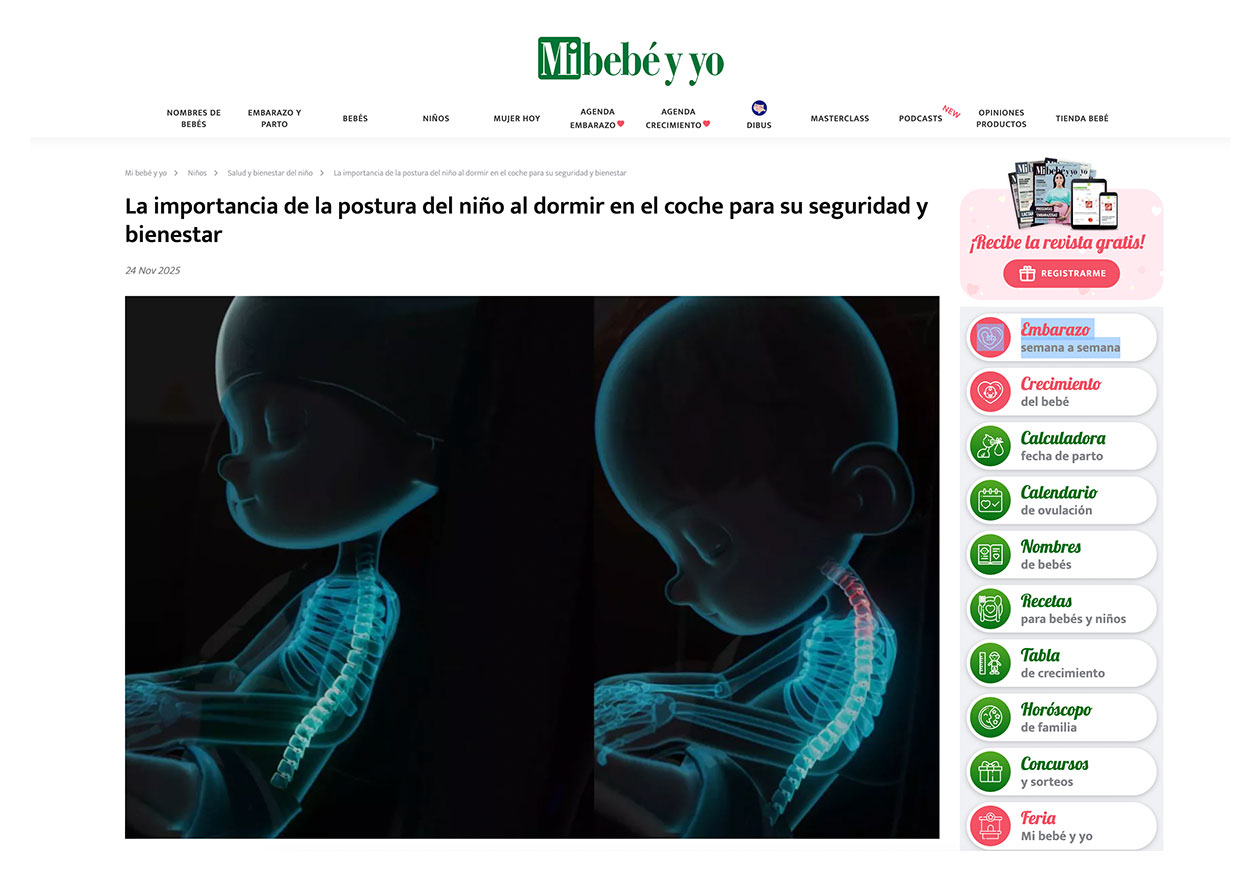
When children fall asleep in the car —something that happens more often than any parent would care to admit— their bodies adopt positions that can compromise their safety and comfort. In a recent report by Mi bebé y yo, this fundamental topic was highlighted, recognizing the work of companies like SafetyRest, where we research, design, and promote solutions to improve children’s posture during journeys.
Sleeping in the car is completely natural: the movement of the vehicle, the constant sound, and the relaxed environment encourage sleep. However, the correct way in which the child sleeps can make the difference, especially in the event of sudden braking, sharp maneuvers, or long trips.
Why Posture is So Important
When a child falls asleep in the car, their head and body tend to slump forward or to the sides. This position, which may seem harmless, entails several problems:
1. Compromised Safety
Poor posture can reduce the effectiveness of child restraint systems.
If the head falls forward, the neck supports excessive weight, and in the event of unexpected braking, the forces are amplified.
2. Respiratory Risks
In babies and young children, excessive neck flexion can hinder airflow, causing micro-awakenings, poor rest, and even episodes of respiratory difficulty.
3. Subsequent Discomfort and Pain
Unstable postures can cause neck pain, pressure on the lumbar area, or prolonged discomfort, especially on long trips.
4. Fatigue and Lack of Real Rest
Sleeping poorly in the car not only affects the journey: it also impacts the child’s mood and behavior for the rest of the day.
What Can We Do to Improve Their Posture?
Prevention starts before starting the car. Here are some key recommendations:
Adjust the Child Seat Correctly
It must be installed following the manufacturer’s instructions and with the appropriate recline for the child’s age.
A position that is too upright is usually the main cause of the head falling forward.
Check the Headrest Height
Correct support avoids twisting, lateral displacement, and favors fluid breathing.
Avoid Non-Approved Accessories
Improvised pillows, harnesses, or fasteners can affect the safety of the restraint system.
Plan Stops
On long trips, periodic breaks help the child change posture and rest more naturally.
SafetyRest’s Mission: Safety, Comfort, and Applied Science
At SafetyRest, we have spent years studying ergonomics and child posture in the automobile. Our multidisciplinary team of pediatricians, engineers, and child safety specialists works to develop solutions that:
improve head stability while sleeping,
promote a natural neck and back position,
reduce pressure and tension points,
and maintain the effectiveness of the child restraint system.
The report by Mi bebé y yo puts a message on the table that we fully share:
sleeping in the car is normal; doing it safely must be the priority.
Sleeping Yes, But Sleeping Well
Every parent knows that a child resting in the car is a gift when the journey is long.
But ensuring that sleep is safe, comfortable, and healthy should not rely on luck, but on proper information and evidence-based solutions.
At SafetyRest, we remain committed to that mission: helping families travel better, sleep better, and above all, travel safer.
Visit the full article (in Spanish) at mibebeyyo.elmundo.es

